Platelet-Rich Plasma Therapy for Stronger, Healthier Hair Growth
Tired of Hair Fall That Keeps Coming Back?
What We Offer
Personalized PRP Care at Skin Sculpt
At Skin Sculpt, PRP is not treated as a standard procedure for everyone. Before starting treatment, the dermatologist evaluates your scalp, hair loss pattern, hair density, medical history, and possible underlying triggers.
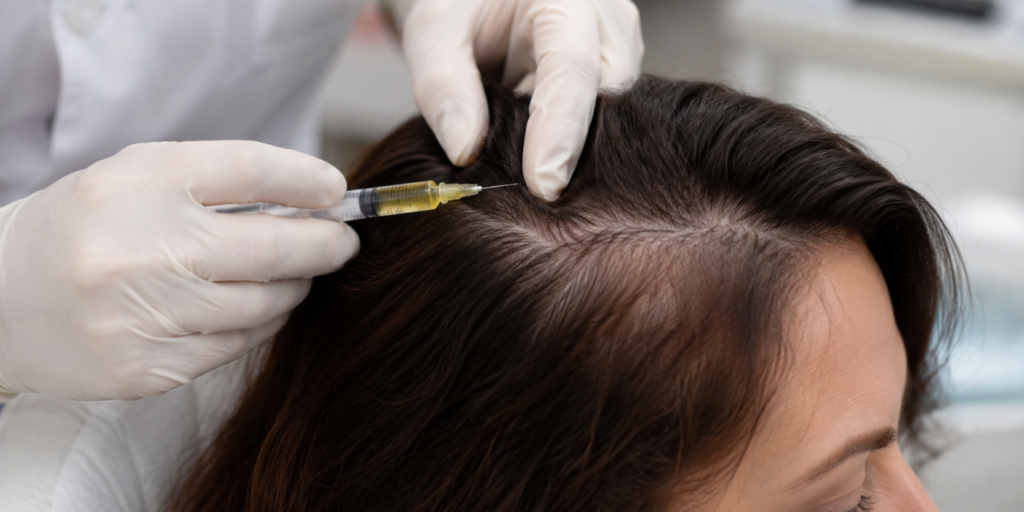
During PRP therapy, a small amount of your blood is collected and processed to separate platelet-rich plasma. This platelet-rich plasma is then carefully injected into targeted areas of the scalp where hair thinning is present.
FAQs
Frequently Asked Questions
PRP, or Platelet-Rich Plasma therapy, is a treatment where platelet-rich plasma is prepared from your own blood and injected into the scalp to support hair follicle health and hair growth.
PRP may be helpful in selected hair fall and hair thinning cases, especially when hair follicles are still active. A dermatologist will decide suitability after scalp evaluation.
PRP may cause mild discomfort during injections. The doctor may use methods to make the procedure more comfortable.
The number of sessions depends on your hair fall condition, severity, and response to treatment. Most patients may need multiple sessions with maintenance advice.
What Professional PRP Treatment Can Help With
Professional PRP therapy can help support hair restoration when planned correctly after diagnosis.
It can help with:
- Reducing hair fall
- Strengthening weak hair roots
- Improving hair thickness
- Supporting healthier hair growth
- Improving scalp condition
- Helping early-stage hair thinning
- Supporting male and female pattern hair loss care
- Improving overall hair density over time
- Reducing dependency on random hair fall products
- Creating a structured hair restoration plan